Research

We develop mathematical and AI methods to quantify structure and predict dynamics across scales. We ask how they jointly shape function, and how this understanding can guide design. Drawing on network science and physics, we study both scientific systems and AI models themselves.

Includes the PI's earlier work with collaborators at USC and other institutions.

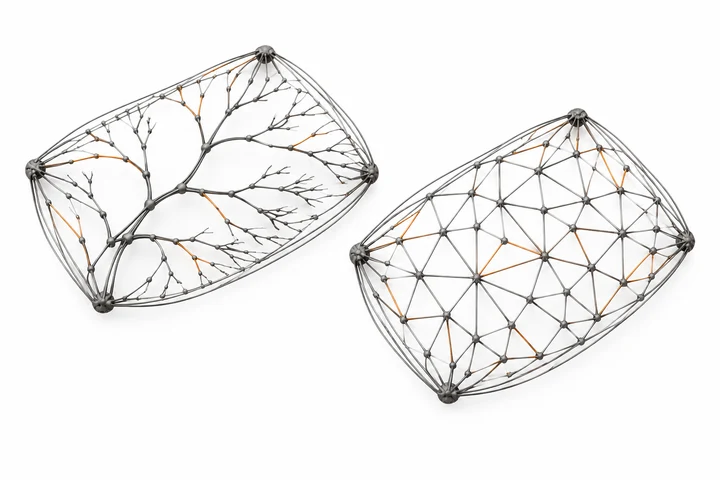
Multiscale structure

  • multifractal analysis
  • network science
  • multiscale representations

How can we quantify the organization of a complex system across scales?

We develop multiscale representations that make network organization and heterogeneity measurable. These quantities let us compare systems and investigate how structural differences relate to behavior and function.

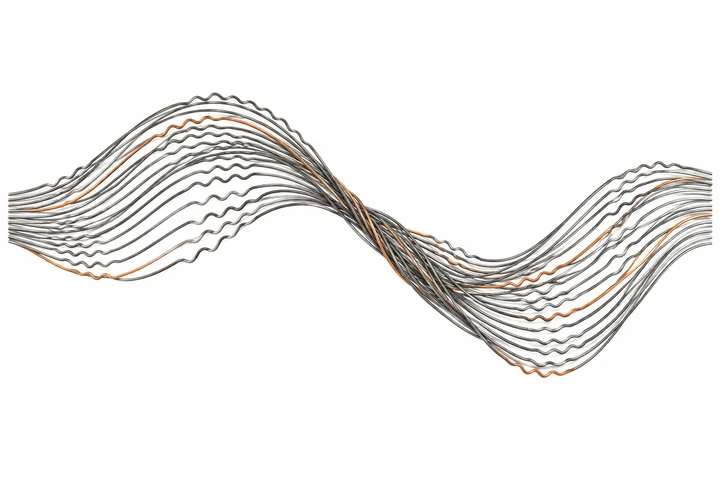
Multiscale dynamics

  • neural operators
  • physics-informed AI
  • multiwavelets

How can we predict physical fields and their evolution across scales?

We develop neural operators that retain fine- and coarse-scale behavior and interactions between fields. We test how predictions hold up at new resolutions and conditions, and whether they provide the information needed for decisions such as planning a flight through urban wind.

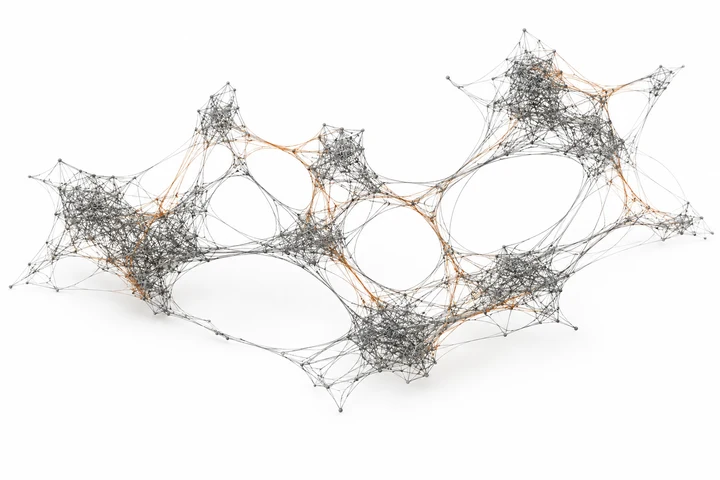
Inverse design & AI design

  • network-informed materials
  • neuro-inspired AI

How can we use this understanding to design for a desired function?

The design problem begins with a desired function, the variables we can change, and the constraints we must respect. We seek to use structural and dynamical understanding to guide those choices, in scientific systems and AI models alike.

We are extending these foundations toward physics-constrained inverse design, linking forward prediction to candidate generation and independent validation.

Questions before methods

First define the scientific question, the relevant scales and constraints, and the evidence needed to evaluate an answer. These choices guide the representation, model, and evaluation.

Forward modeling

System & conditionsmap toStructure, dynamics, or function

Define the quantity of interest and develop a model to estimate it. Depending on the question, the target may be a structural property, an evolving field, or a functional response.

Inverse design

Structures, interactions & controlsare sought to meetDesign targets & constraints

Use forward models and domain knowledge to guide the search for structures, interactions, or controls that meet a target.

Predictive accuracy alone does not establish mechanism. Inverse design requires constraints and independent validation, not simply reversing a predictor.

Science and AI, in both directions

AI for Science

Develop representations and learning operators that capture the structure, interactions, and physical constraints of scientific systems.

Science for AI

Study AI models as scientific systems, using network analysis, multiscale representations, and information theory. This science of AI can inform the design of architectures and learning objectives.